

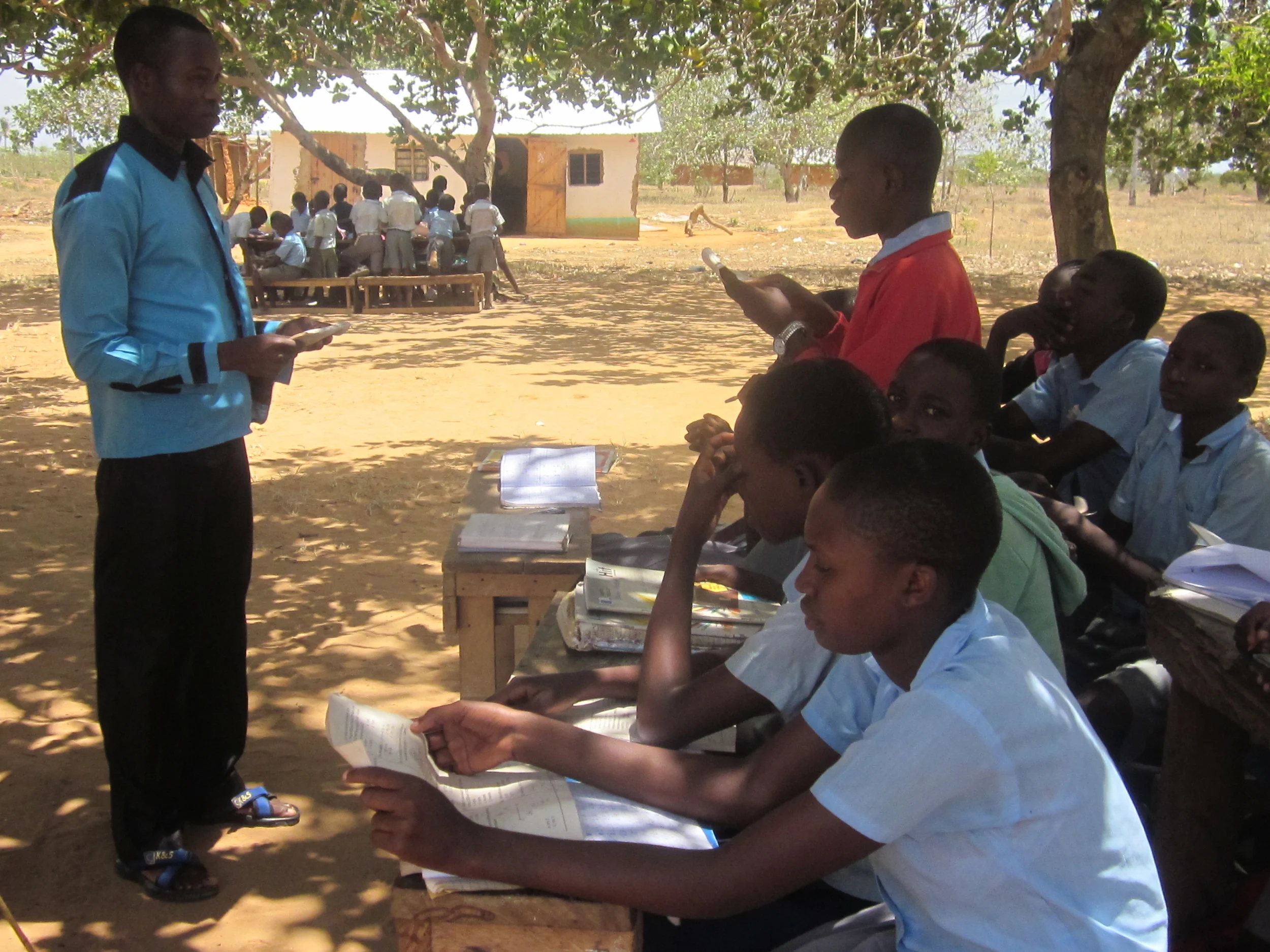
We recently received this letter from a grateful ASSETS student which was a real encouragement to us and was great to hear how the eco-bursary scheme has really made a difference in his life. Dear Sir/Madam,
I greet you in the name of our Lord Jesus Christ hoping that you are going on well. With me I thank the lord for the protection which he had given me so far.
The main aim of writing this letter is to thank you for giving me assistance during my schooling time by paying my school fees at Dr. Krapf Secondary School. I highly appreciate your efforts of ensuring the needy students get the chance of continuing with their education by giving school fees assistance.
I completed my four years well and managed to get a mean grade of C plain KCSE in which I have attached the results slip.
I say thanks for the whole support you gave me in my education and I pray that God would shower you with blessings and giving more resources in your bid of helping the other students who are beneficiaries.
Once again I salute you for your good work and may the Lord be with you all the time. Bye.
Yours Faithfully,
Benson Safari
We continue to be really grateful to God for his goodness in helping us assist these incredibly needy children to get to Secondary school. There are still many out there that need help. By sending a child to school with an ASSETS bursary we not only give the child their school fees, but do a lot of follow up with them and their families to make sure their studies are going well and that they have understood the importance of caring for the forest and creek.
All of this - the fees, the follow up costs including transport and salaries of staff critical to the whole process - only costs a mere $24 per month. If you would be interested to help and sponsor a child or simply give regularly to what I believe is an awesome project, please do so!
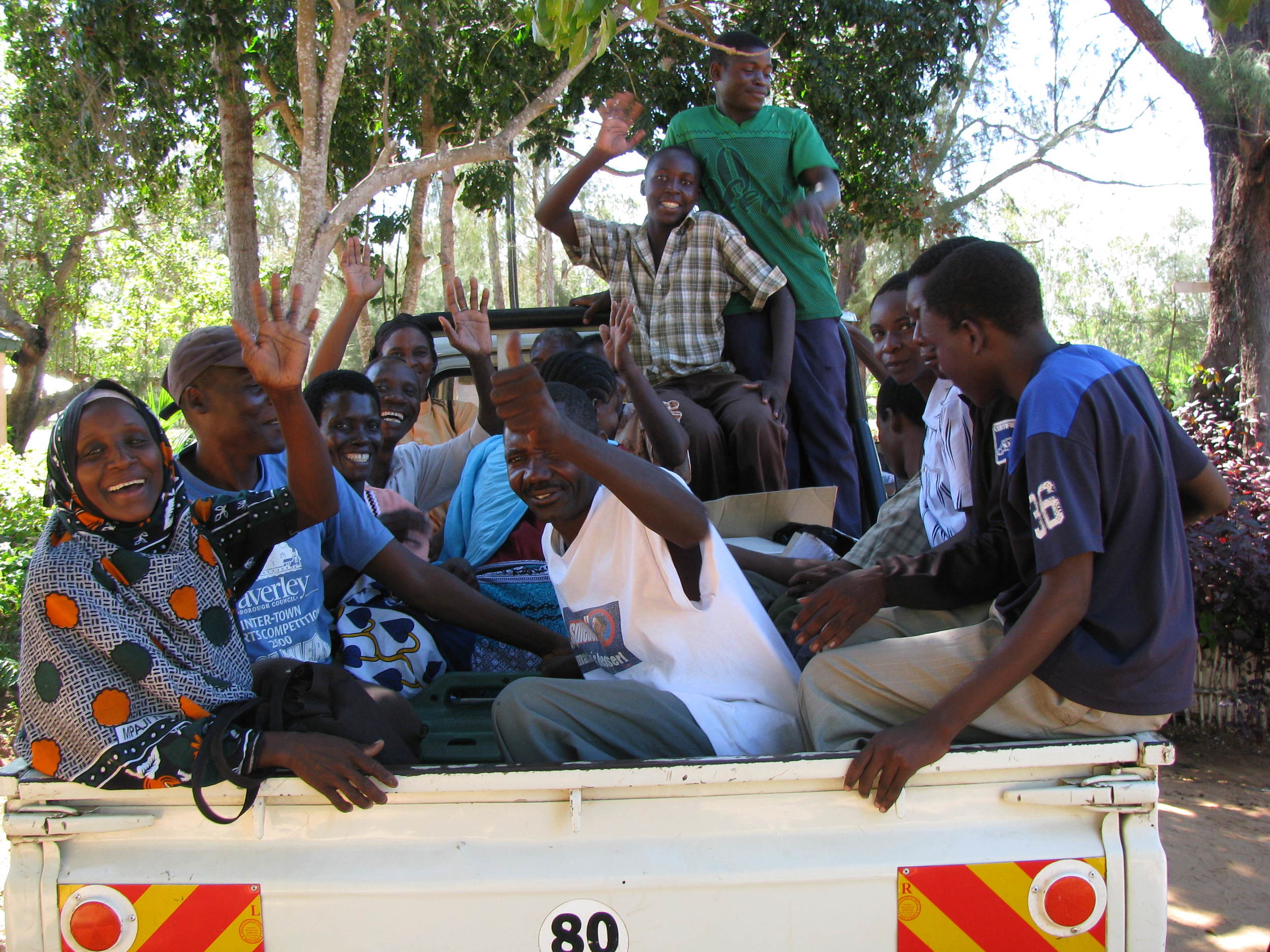
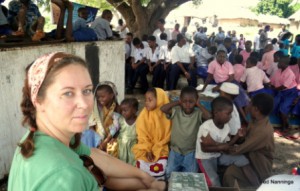
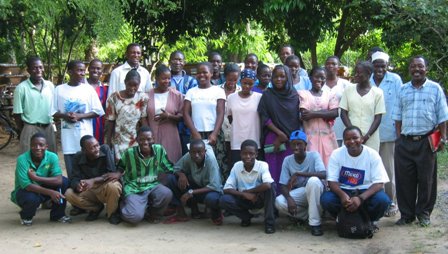 A group of ASSETS beneficiaries at one of the follow up events for students during the holidays.
If you would like to know how to donate then please do so through the A Rocha donations page - until we have the 'Donate' button functioning again on this blog.
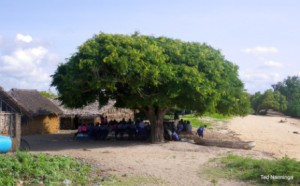 Public meetings and other social gatherings seem to always happen under the shade of the largest tree in the community. Pretty cool, in both senses of the word.
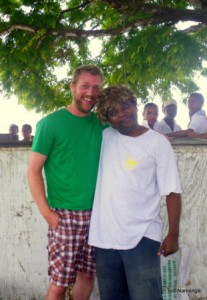 Ted (a volunteer from Canada) and Tsofa Mweni, ARK's environmental education coordinator. Tsofa is quite a character (as you can see...this blonde wig is supposed to make them look like brothers) and is extremely good at interacting with childern.
 After some instructions on safety and where to go, the kids recieved bags and gloves and proceeded to pick up as much trash they could find. Roughly 90 childern from four different schools, as well as childern from Chipande village (foreground), participated in the beach clean up.
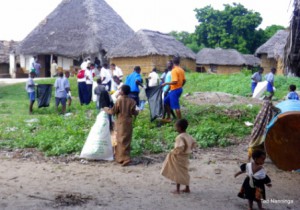 Scouring the beach and surrounding area for anything not bio-degradeable.
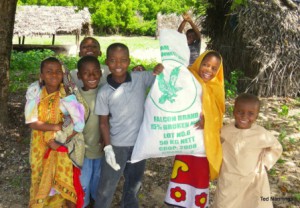 The kids were quite proud of what they collected.
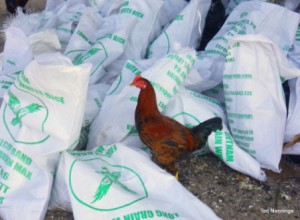 Over 400 kg of "taka taka" - and a chicken - were collected in only an hour.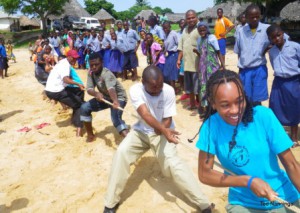
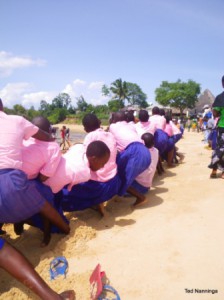 After the clean up a couple of tug-of-war games were organized between students and organizations.
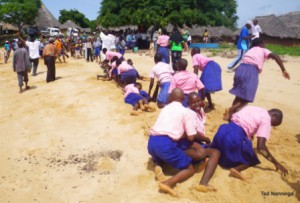 Cheering and shouting encouragement, the kids and fans alike had a great time.
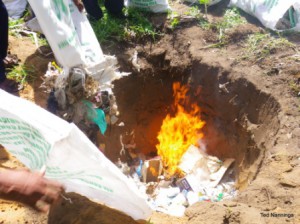 The collected garbage was then thrown in a pit and burned. I know, kinda ironic, but it does illustrate the complexity of environmental issues in Kenya. There are limited recycling facilities or programs in Kenya and landfills don't keep the rubbish contained very well.
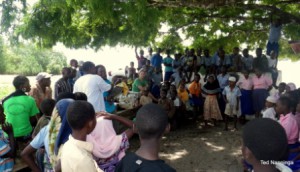 After the games Tsofa talked to the kids about the effects of pollution on the environment and wildlife. The highlight of his talk was when a live turtle being rehabilitated at the Watamu Turtle Watch facility was shown to the group. Many kids had eaten turtle meat but not many had actually seen a live one or learned that many turtles die from eating plastic bags, mistaken for jellyfish.
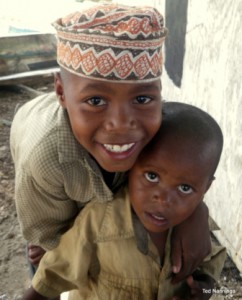 At the end of day we handed out biscuits (cookies) and juiceboxes for everyone involved. The faces above sum up the entire day.
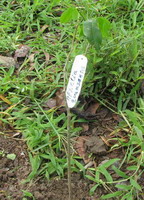 I was very humbled to note that they had actually grasped the whole concept of replanting lost indigenous trees. This happened in Mijomboni, one of the ASSETS beneficiary schools, shortly before we embarked on a tree planting exercise at F. B. Thuva secondary school. These girls are potential of becoming beneficiaries if they attain the required score in their end of primary school exams in November. I believe they will carry the massage of indigenous tree planting to their siblings, parents and neighbors.
 Most people around Arabuko-Sokoke Forest, plant fruit trees instead of indigenous trees. This is largely because indigenous trees occupy so much space in their farms not knowing that most of the trees like mango, coconut and cashew nut are in fact exotic. It is shocking that some community members argue that the forest can never get finished because it has always been there. What unbelievable level of ignorance! The ASSETS program has enabled many and their parents to change their attitude towards conservation of the forest and Mida Creek through awareness, education and benefit sharing.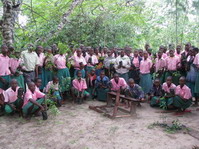


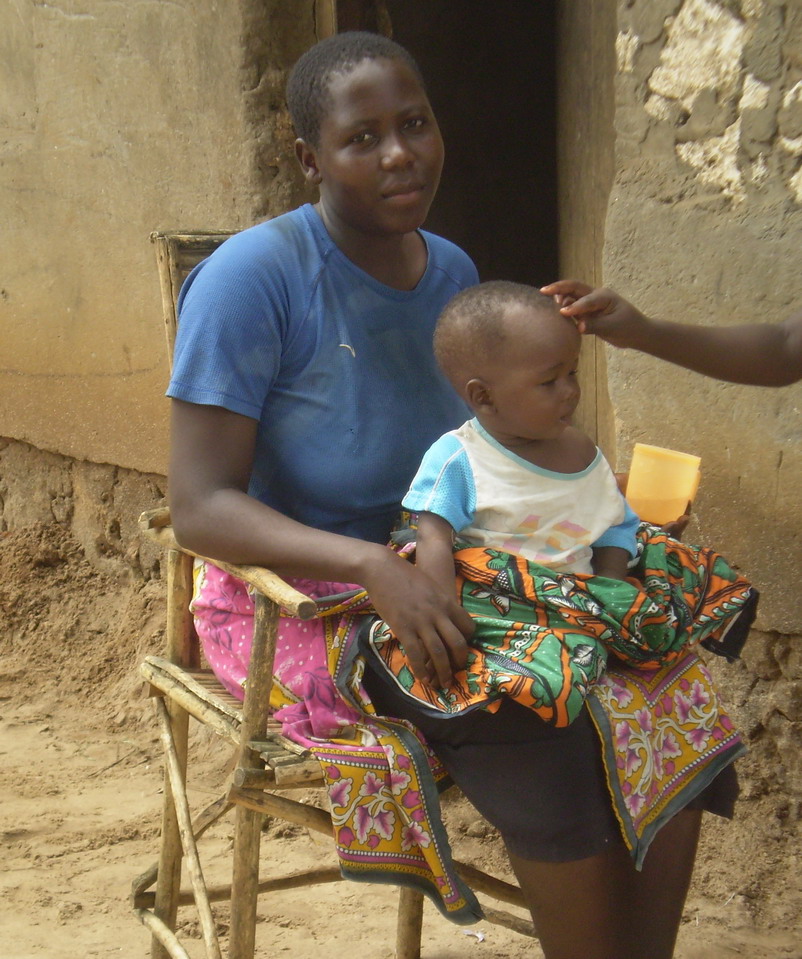
 While the students were doing their learning through a debate and role play, the parents were seperately engaged in a discussion about the most sustainable way of utilising the forest. Not surprising, the newly selected beneficiaries did not have any idea about the eco-tourism value of Arabuko-Sokoke Forest. They however left the meeting with a new messege for their families that there are people who come all the way from Europe and America to see the Golden-rumped elephant shrew in the forest; what an odd way of spending ones money! they might have thought.
The meetings continue!
While the students were doing their learning through a debate and role play, the parents were seperately engaged in a discussion about the most sustainable way of utilising the forest. Not surprising, the newly selected beneficiaries did not have any idea about the eco-tourism value of Arabuko-Sokoke Forest. They however left the meeting with a new messege for their families that there are people who come all the way from Europe and America to see the Golden-rumped elephant shrew in the forest; what an odd way of spending ones money! they might have thought.
The meetings continue!